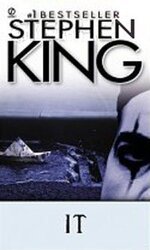
A promise made twenty-eight years ago calls seven adults to reunite in Derry, Maine, where as teenagers they battled an evil creature that preyed on the city’s children. Unsure that their Losers Club had vanquished the creature all those years ago, the seven had vowed to return to Derry if IT should ever reappear. Now, children are being murdered again and their repressed memories of that summer return as they prepare to do battle with the monster lurking in Derry’s sewers once more.
Авторы: King Stephen Edwin
voice yet — another a capella singer in the damned choir that is this town.
‘No reason not to tell you,’ he said . ‘No one will print it, and no one would believe it even if they did.’ He offered me an old-fashioned apothecary jar. ‘Licorice whip? As I remember, you were always partial to the red ones, Mikey.’
I took one. ‘Was Chief Sullivan there that day?’
Mr Keene laughed and took a licorice whip for himself. ‘You wondered about that, did you?’
‘I wondered,’ I agreed, chewing a piece of the red licorice. I hadn’t had one since I was a kid, shoving my pennies across the counter to a much younger and sprier Mr Keene. It tasted just as fine as it had back then.
‘You’re too young to remember when Bobby Thomson hit his home run for the Giants in the play-off game in 1951,’ Mr Keene said. ‘You wouldn’t have been but four years old. Well! They ran an article about that game in the newspaper a few years after, and it seemed like just about a million folks from New York claimed they were there in the ballpark that day.’ Mr Keene gummed his licorice whip and a little dark drool ran down from the corner of his mouth. He wiped it off fastidiously with his handkerchief. We were sitting in the office behind the drugstore, because although Norbert Keene was eighty-five and retired ten years, he still did the books for his grandson.
‘Just the opposite when it come s to the Bradley Gang!’ Keene exclaimed. He was smiling, but it was not a pleasant smile — it was cynical, coldly reminiscent. ‘There was maybe twenty thousand people who lived in downtown Derry back then. Main Street and Canal Street had both been paved fo r four years, but Kansas Street was still dirt. Raised dust in the summer and turned into a boghole every March and November. They used to oil Up-Mile Hill every June and every Fourth of July the Mayor would talk about how they were going to pave Kansas Street, but it never happened until 1942. It . . . but what was I saying?’
‘Twenty thousand people who lived right downtown,’ I prompted.
‘Ayuh. Well, of those twenty thousand, there’s probably half that have passed away since, maybe even more — f i f ty years is a long time. And people have a funny way of dying young in Derry. Perhaps it is the air. But of those left, I don’t think you’d find more than a dozen who’d say they were in town the day the Bradley Gang went to Tophet. Butch Rowden over at the meat market would fess up to it, I guess — he keeps a picture of one of the cars they had up on the wall where he cuts meat. Looking at that picture you’d hardly know it was a car. Charlotte Littlefield would tell you a thing or two, if you could get on he r good side; she teaches over to the high school, and although I reckon she must not have been more than ten or twelve at the tune I bet she remembers plenty. Carl Snow . . . Aubrey Stacey . . . Eben Stampnell . . . and that old geezer who paints those funny pictures and drinks all night at Wally’s — Pickman, I think his name is — they’d remember. They were all there . . . ‘
He trailed off vaguely, looking at the licorice whip in his hand. I thought of prodding him and decided not to.
At last he said, ‘Most of the others would lie about it, the way people lied and said they were there when Bobby Thomson hit his homer, that’s all I mean. But people lied about being at that ballgame because they wished they had been there. People would lie to you about being in Derry that day because they wish they hadn’t been. Do you understand me, sonny?’
I nodded.
‘You sure you want to hear the rest of this?’ Mr Keene asked me. ‘You’re looking a bit peaked, Mr Mikey.’
‘I don’t,’ I said, ‘but I think I better, all the same.’
‘Okay,’ Mr Keene said mildly. It was my day for memories; as he offered me the apothecary jar with the licorice whips in it, I suddenly remembered a radio program my mother and dad used to listen to when I was just a little kid: Mr Keene, Tracer of LostPersons.
‘Sheriff was there that day, all right. He was s’posed to go bird-hunting, but he changed his mind damn quick when Lal Machen came in and told nun that he was expecting Al Bradley that very afternoon.’
‘How did Machen know that?’ I asked.
‘Well, that’s an instructive tale in itself,’ Mr Keene said, and the cynical smile creased his face again. ‘Bradley wasn’t never Public Enemy Number One on the FBI’s hit parade, but they had wanted him — since 1928 or so. To show they could cut the mustard, I guess. Al Bradley and his brother George hit six or seven banks across the Midwest and then kidnapped a banker for ransom. The ransom was paid — thirty thousand dollars, a big sum for those days — but they killed the banker anyway.
‘By then the Midwest had gotten a little toasty for the gangs that ran there, so Al and