
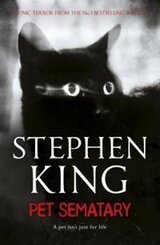
When the Creeds move into a beautiful old house in rural Maine, it all seems too good to be true: physician father, beautiful wife, charming little daughter, adorable infant son-and now an idyllic home. As a family, they’ve got it all…right down to the friendly cat. But the nearby woods hide a blood-chilling truth-more terrifying than death itself…and hideously more powerful.
Авторы: King Stephen Edwin
and made as many of the arrangements as he could by telephone; he made an appointment to come in the following day and make the rest. Yes, he would have her embalmed; he wanted her in a dress, which he would provide; yes, he would pick out underwear; no, he did not want the mortuary to supply the special shoes which laced up the back. Would they have someone wash her hair? he asked. She washed it last on Monday night, and so it had been dirty when she died. He listened, and Louis, whose uncle had been in what those in the business called “the quiet trade,” knew the undertaker was telling Jud that a final wash and set was part of the service rendered. Jud nodded and thanked the man he was talking to, then listened again. Yes, he said, he would have her cosmeticized, but it was to be a lightly applied layer. “She’s dead and people know it,” he said, lighting a Chesterfield. “No need to tart her up.” The coffin would be closed during the funeral, he told the director with calm authority, but open during the visiting hours the day before. She was to be buried in Mount Hope Cemetery, where they had bought plots in 1951. He had the papers in hand and gave the mortician the plot number so that preparations could begin out there: H-101. He himself had H-102, he told Louis later on.
He hung up, looked at Louis, and said, “Prettiest cemetery in the world is right there in Bangor, as far as I’m concerned. Crack yourself another beer, if you want, Louis. All of this is going to take awhile.”
Louis was about to refuse-he was feeling a little tiddly-when a grotesque image arose unbidden behind his eyes: Jud pulling Norma’s corpse on a pagan litter through the woods. Toward the Micmac burying ground beyond the Pet Sematary.
It had the effect of a slap on him. Without a word, he got up and got another beer out of the fridge. Jud nodded at him and dialed the telephone again. By three that afternoon, when Louis went home for a sandwich and a bowl of soup, Jud had progressed a long way toward organizing his wife’s final rites; he moved from one thing to the next like a man planning a dinner party of some importance. He called the North Ludlow Methodist Church, where the actual funeral would take place, and the Cemetery Administration Office at Mount Hope; these were both calls the undertaker at Brookings-Smith would be making, but Jud called first as a courtesy. It was a step few bereaved ever thought of… or if they thought of it, one they could rarely bring themselves to take. Louis admired Jud all the more for it. Later he called Norma’s few surviving relatives and his own, paging through an old and tattered address book with a leather cover to find the numbers. And between calls, he drank beer and remembered the past.
Louis felt great admiration for him… and love?
Yes, his heart confirmed. And love.
When Ellie came down that night in her pajamas to be kissed, she asked Louis if Mrs. Crandall would go to heaven. She almost whispered the question to Louis, as if she understood it would be better if they were not overheard. Rachel was in the kitchen making a chicken pie, which she intended to take over to Jud the next day.
Across the street, all the lights were on in the Crandall house. Cars were parked in Jud’s driveway and up and down the shoulder of the highway on that side for a hundred feet in either direction. The official viewing hours would be tomorrow, at the mortuary, but tonight people had come to comfort Jud as well as they could, and to help him remember, and to celebrate Norma’s passing-what Jud had referred to once that afternoon as “the foregoing.” Between that house and this, a frigid February wind blew. The road was patched with black ice. The coldest part of the Maine winter was now upon them.
“Well, I don’t really know, honey,” Louis said, taking Ellie on his lap. On the TV, a running gunfight was in progress. A man spun and dropped, unremarked upon by either of them. Louis was aware-uncomfortably so-that Ellie probably knew a hell of a lot more about Ronald McDonald and Spiderman and the Burger King than she did about Moses, Jesus, and St. Paul. She was the daughter of a woman who was a nonpracticing Jew and a man who was a lapsed Methodist, and he supposed her ideas about the whole spiritus mundi were of the vaguest sort-not myths, not dreams, but dreams of dreams. It’s late for that, he thought randomly. She’s only five, but it’s late for that. Jesus Christ, it gets late so fast.
But Ellie was looking at him, and he ought to say something. “People believe all sorts of things about what happens to us when we die,” he said. “Some people think we go to heaven or hell. Some people believe we’re born again as little children-”
“Sure, carnation. Like what happened to Audrey Rose in that movie on TV.”
“You never saw that!” Rachel,